


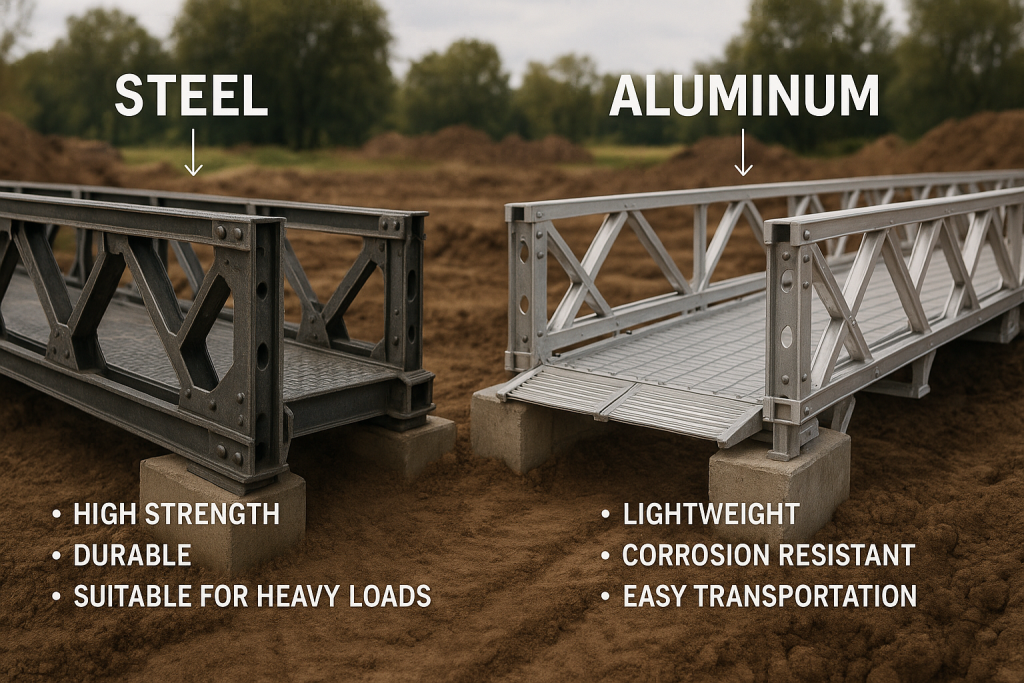
In the world of temporary bridge materials, one debate consistently stands out: steel vs aluminum for bridges. Both are widely used in modular bridge systems, emergency construction, and infrastructure repair. But when it comes to selecting the best metal for temporary bridges, material selection involves far more than strength or price—it’s about durability, corrosion resistance, weight, recyclability, and project-specific demands.
This comparison explores the physical properties, real-world applications, and key trade-offs between steel and aluminum—two metals that have helped shape everything from bridges and skyscrapers to dental tools, bicycles, and aircraft.
The Bigger Picture: Why Temporary Bridge Materials Matter
Temporary bridges serve as critical links in disrupted infrastructure—spanning rivers, culverts, construction sites, or pedestrian zones during roadwork, flood events, or detours. Their success depends on intelligent engineering and smart material selection. Just as a dentist chooses the right resin or fluoride varnish for a temporary crown, engineers must evaluate materials like structural steel, aluminum alloys, and composite materials to ensure reliability and performance.
Steel: The Backbone of Temporary Bridge Construction
1. Strength and Load Capacity
Steel—particularly carbon steel, stainless steel, and alloy steel—offers high ultimate tensile strength, compressive strength, and ductility, making it ideal for heavy-duty bridge spans like truss bridges, girder bridges, and Bailey bridges. These bridges often support trucks, construction equipment, and dense traffic flows.
2. Durability and Maintenance
Steel has long been favored for its longevity in bridge construction. However, without proper galvanization or coating, it can be vulnerable to corrosion and rust—especially in humid or coastal environments. Surface treatments like zinc plating or powder coating add critical protection.
3. Fabrication and Modularity
Steel components can be prefabricated, laser cut, and rapidly assembled on-site, supporting modular bridge systems that minimize downtime. Think of it as the construction version of a cartridge-based temp crown kit—customizable, durable, and engineered for speed.
4. Sustainability and Recycling
Steel is one of the most recyclable materials on the planet. The steelmaking process has improved in energy efficiency and carbon capture, helping reduce greenhouse gas emissions and making steel more sustainable than ever.
Aluminum: Lightweight Versatility with High Corrosion Resistance
1. Weight and Transport Efficiency
Aluminum’s key advantage lies in its low density—about one-third that of steel. This makes aluminum bridges significantly lighter, which reduces fuel consumption during transport and simplifies installation logistics. It’s like comparing a composite dental inlay to a full metal crown—lighter and less invasive, but not always suitable for heavy loads.
2. Corrosion Resistance
Thanks to its natural aluminium oxide layer, aluminum resists rust without the need for heavy coatings. It thrives in damp, corrosive environments—ideal for pedestrian footbridges, sidewalk spans, and light-duty crossings exposed to rain, snow, or road salts.
3. Fabrication and Aesthetics
Aluminum is easy to shape through extrusion, die casting, or 3D printing, offering greater design freedom and aesthetic appeal. Its applications extend from aerospace to cosmetic dentistry, thanks to its lightweight and attractive finish.
4. Drawbacks
Aluminum’s abrasion resistance, ductility, and ultimate tensile strength are generally lower than steel’s. For high-traffic routes or heavy construction equipment, it may not offer the longevity or fatigue resistance required—unless reinforced or combined with other alloys or composite materials.
Steel vs. Aluminum for Bridges: Head-to-Head Comparison
| Feature | Steel | Aluminum |
| Strength | Higher tensile and compressive strength | Lower strength; suited for lighter loads |
| Weight | Heavy; requires trucks and cranes for transport | Lightweight; easier to handle and install |
| Corrosion Resistance | Needs galvanization or coating (e.g., zinc, oxide) | Naturally corrosion-resistant via aluminium oxide layer |
| Fabrication | Ideal for prefabricated modular bridges; high structural rigidity | Easier to mold and extrude; better for curves and lightweight spans |
| Sustainability | Highly recyclable; long lifecycle when maintained | Also recyclable; reduced carbon footprint during transport |
| Best Use Cases | Girder bridges, truss spans, highway detours, heavy traffic | Footbridges, sidewalk crossings, light rail, pedestrian use |
| Aesthetics and Design | Industrial finish; more rigid in form | Sleek and modern; easier to shape |
| Cost | Lower material cost; higher shipping and handling | Higher upfront cost; lower labor and logistics |
Real-World Applications
- Steel Bridges: Used in highway detours, rural road bypasses, and emergency Bailey bridges. Built to carry trucks, heavy equipment, and pedestrians across long spans with confidence.
- Aluminum Bridges: Ideal for modular pedestrian bridges, footbridges in parks, and temporary construction access paths where corrosion and quick setup matter most.
Think of it like choosing between a steel dental crown for molars and a composite veneer for front teeth. Both serve a purpose—but one takes the pressure better.
What’s the Best Metal for Temporary Bridges?
There’s no universal winner. The best metal for temporary bridges depends on your specific use case:
- For high-traffic areas, heavy machinery, or longer spans: steel is your go-to.
- For corrosion-prone environments, short-term installations, or fast deployment: aluminum wins.
Just like in endodontics, orthodontics, or prosthodontics, the best outcome comes from tailored solutions—guided by a deep understanding of materials science, load demands, and environmental factors.
Final Thoughts
Temporary bridges are critical tools in modern infrastructure. Whether you choose steel bridges with galvanized trusses or sleek aluminum alloys with built-in corrosion resistance, the goal is the same: a safe, cost-effective, and sustainable solution.
Ready to plan your project? Consult with engineers and suppliers who understand both the science and logistics of modern bridge construction. Because in a world built on connections, every span matters—whether it’s made of steel, aluminum, or a little bit of both.